So again, MASSIVE apologies for not posting much over the last few weeks, but I’m back! I’m hoping to get some posts scheduled for next week over the weekend. Watch this space!
Since I’ve not been posting, however, I have had time to think and get organised with the blog. I started with the premise that even though I don’t expect it to get ‘famous’ or become a source of income, at least not in the near future, I was still going to treat it as a professional endeavour. As a result and since starting, I’ve learned a lot about blogging. I’ve started applying these things already, but I think it’s time to properly get into gear.
One tip a lot of people have offered is this: Have A Focus. While this blog is predominantly about books and literature, I do want to have the freedom to write about other stuff too. I’ve decided, then, to split my posts into 3 categories, posting one on every blogging day (Mondays, Wednesdays and Fridays, as it stands):
‘Me’ Mondays: Personal, Lifestyle and Opinion posts. These will include any of my opinion or personal posts that don’t fit the other categories, and possibly some lifestyle stuff too. This will include ‘Writing About Writing’ posts.
Review Wednesdays: This isn’t going to change! I still intend to post reviews every Wednesday, whether they’re book, film & tv, theatre or even video game reviews.
‘Fandom’ Fridays: Nerd time! These will include posts on all sorts of things I’m passionate about, from specific ‘fandoms’ to general geekery. This will include non-review literature posts.
I know it seems like there’s very little room for creative pieces here, and there’s a reason for that – I don’t write them and you don’t read them often enough. If I do write anything creative it will be posted on Mondays, if not as an extra piece in the week.
Hey guys! I’d just like to apologise for the lack of posts lately. Over the next few weeks my posts will probably be quite erratic – if you haven’t seen on Twitter/Instagram, I graduated yesterday! I am at home for tonight but heading to London tomorrow for a very busy weekend, then on Monday I start a two week work experience placement. Until I have the time to sleep again & I get back into a regular pattern posts might not be as regular as usual. Bear with me!
It is undeniable that the Harry Potter series deals with social issues in many ways – they are written into the text in such a way that has shaped the way generations have and continue to view the world. Millions of young people have grown up with Harry, often looking to the Wizarding World for guidance. It is unsurprising, then, that as we and our society develop, that we both appreciate the ways the series explores social injustice and acknowledge the aspects that are unsatisfying. While the series tackles many issues in an immensely overt way, there are things that could be improved.
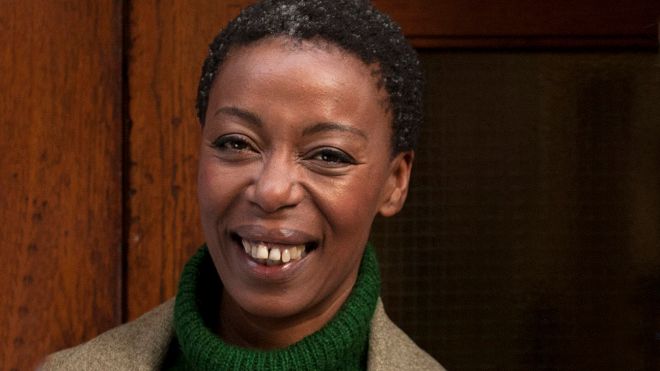
Hermione, for instance. In the current stage show, Harry Potter and the Cursed Child, Hermione is played by Noma Dumezweni. Many were unhappy with the idea of a black actress playing her. Others however, myself included, feel that Hermione as a black woman adds to Hermione’s story. She faces racism in the wizarding world for her ‘blood status’ – she’s a muggleborn, which is frowned on by some “purebloods” – wizards born into wizarding families. She faces immense prejudice at the hands of Draco Malfoy and other purebloods, and in the film series has a racial slur, “mudblood”, carved into her arm by Bellatrix Lestrange (Deathly Hallows, Part 1).
In the novels, JK Rowling doesn’t specify the colour of Hermione’s skin. While I believe that writers should limit character descriptions and leave the reader to garner their own impressions of the characters, stating that Hermione had dark skin could have strengthened the impact her struggle with racism stronger.
Another aspect I feel could have been explored was Dumbledore’s sexuality. Rowling revealed on a book tour for the last novel in the series that Dumbledore was gay. Many LGBT+ people look to the series for it’s messages of acceptance and love, and relate to struggles such as Hermione’s. A gay character further opens up the world to LGBT+ people, however Rowling chose not to write in Dumbledore’s sexuality – at least not overtly. Of course it would be difficult to publish a children’s book, particularly in the 90s and early 00s, with an openly gay character – but considering the immense success of the Potter series, I seriously doubt sales would have been that affected if she had written it into one of the later novels.
In a book series that has taught me and so many others about acceptance, love and equality it is disheartening that some things like these examples that could have easily been included were left out. At the same time, the series isn’t solely a social commentary, and manages to balance discussion of several important issues with magic, dragons, mermaids, Dark Lords and even the odd Quidditch match. We can make several real life comparisons and learn a lot from the series, even if it isn’t perfect.
‘Rose Bazelet is determined to fight against the destruction of her family home until the very end; as others flee, she stakes her claim in the basement of the house on rue Childebert, ignoring the sounds of change that come closer and closer each day. Attempting to overcome the loneliness of her daily life, she begins to write letters to Armand, her late husband. As Rose delves into her memories, she reveals the secrets held within the walls of her beloved house.’
The House I Loved is set in Paris, 1869, towards the end of Napoleon III’s reign and the height of Georges-Eugene Haussmann’s ‘Renovation of Paris’. The renovations saw whole neighbourhoods in central Paris demolished and rebuilt in line with Haussmann’s designs. Tatiana de Rosnay’s novel centres around one particular road, the rue Childebert – now part of the Boulevard Saint-Germain. Her protagonist, Rose Bazelet, lives on rue Childebert, in her late husband’s family home.
Taken from the front of the book.
The novel is written in the form of an extensive letter, written by Rose to her late husband Armand. Rose is an elderly woman who is set in her ways and is incredibly attached to her home. She sees it as the last link she has to her late husband and beloved mother in law. She often reminisces about happier times, but ends up delving into dark, repressed memories of the house and her life.
Before I read it, I wasn’t sure about this book. While the time period and location seemed interesting, a closed setting such as the basement and the style of writing the book as a letter/series of letters is restricting and been done a lot. I found myself fortunately mistaken in many ways, but I did find it predictable in many ways. It is the kind of novel that you predict the ending of from the start of the novel. Although the story does go off into many tangents, these can also be easily predicted. This isn’t necessarily a bad thing in small doses, but I managed to predict large portions of the novel, when I’d much rather be surprised in at least some small way.
Despite this, it was an enjoyable and emotional read. For historical fiction, it was easy to read but informative. If I could go back, I’d have read up on the context a bit beforehand – I knew nothing about it, and while the novel does explain it well I find that when reading historical fiction I prefer to know at least a small amount about the context in order to fully understand it. Tatiana de Rosnay does provide a good level of context and the text was easy to understand without knowing anything else about the time period.
So, I’ve been doing a lot of writing today, but I’m an idiot and thought it was Tuesday. It took me until 8pm to realise I had the wrong day because I am a genius. This isn’t going to be a particularly long or interesting post but it will help you get to know me better at least: I’m doing the reading habits tag!
1. Do you have a certain place at home for reading?
My room, but it’s not something I think about.
2. Bookmark or random piece of paper?
Okay, this may get me killed, but if I can’t find anything to use as a bookmark I do fold the corners of pages. Scraps of paper and receipts are probably more common markers than bookmarks in my books though – I lose them too easily!
3. Can you just stop reading or do you have to stop after a chapter/ a certain amount of pages?
I like to stop on a 5 or a 0 page if not a chapter. It just feels neat and it’s easier to remember if I lose my page for whatever reason.
4. Do you eat or drink while reading?
Yes – I don’t like crumbs in the pages but I do eat while I read. I hate myself, too. Plus, there’s something cosy about a hot drink, cold weather and a good book.
5. Multitasking: Music or TV while reading?
I like background noise but I don’t generally have anything on – it tends to distract me if I’ve chosen the song/show because I’ll concentrate on that instead. There’s never a lack of background noise in this house, though!
6. One book at a time or several at once?
One, generally speaking – I have two on the go at the moment though.
7. Reading at home or everywhere?
Anywhere, but I prefer at home/somewhere on my own.
8. Reading out loud or silently in your head?
In my head, it comes more naturally to me – I even used to read to my youngest brother and start reading in my head without realising. I like hearing poetry but I still don’t really read it aloud.
9. Do you read ahead or even skip pages?
Nooooo! You never know what you might ruin or miss!
10. Breaking the spine or keeping it like new?
Keep it like new – or, I don’t intend to break spines, I can’t say they all stay nice here though!
11. Do you write in your books?
Not really, I did for course books sometimes but not pleasure reading.
12. Who do you tag?
Anyone who wants to do it – comment below to tell me your reading habits!
Over the last few weeks, a lot has happened in British politics. If you know me, you will probably have guessed that it was only a matter of time before I waded into this mess. I, among a large number of others, have been bitterly disappointed in the decisions made by our country and its leaders. Still, this isn’t going to be a rant about the EU referendum; rather the things I’ve noticed during it.
Social media can be a blessing and a curse when it comes to politics. It allows for open discussion and sharing of information. It also allows for false information, scaremongering and aggressive arguments – with very few consequences. Throughout the process of the EU referendum I’ve seen a vast amount of both good and bad political discussion on social media, particularly Facebook. The scale of these posts is very unusual, unless there’s a vote coming up. It’s not necessarily that people don’t care, but people don’t believe they need to remain active in politics – and this is simply wrong.
Goodbye my lover, goodbye my friend… (not my picture, or my union)
Political decisions literally shape the way our country is run, and the only way we can have a say in that is by being active and showing our country’s leadership that we care. Voting, while incredibly, incredibly important, is not the be-all-and-end-all, and to truly use your vote it’s important to have a good understanding of what you’re voting for. It is vital for young people to stay active and use our voices throughout the political cycle – the government may not always listen, but that doesn’t mean we shouldn’t speak our minds and get our opinions out there; we cannot be heard if there’s nothing to listen to. Our futures depend on the decisions our government make now; that isn’t something to be apathetic about. So what can we do?
Remember That Your Vote Counts.
If there’s one thing this referendum has shown us, it’s that our votes count. The majority of people, including Leave campaign leaders and many Leave voters, believed that we would vote to remain in the EU. Over the days following the referendum, there were many stories in the press of ‘Bregretters’ – people who had voted leave, mostly as a ‘protest’ vote, and were now regretting it. There is no such thing as a protest vote; if you don’t believe in something or don’t want it to happen, don’t vote for it. There are consequences to all of our actions, especially in something like this. Our entire country’s future has been changed – that isn’t something to take lightly.
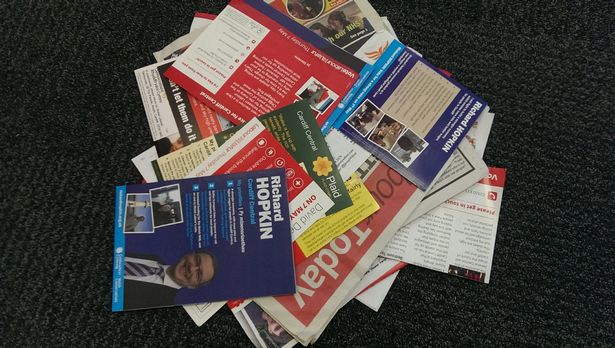
Image found here, regarding the 2015 General Election. I’d say it’s pretty accurate!
Have an Opinion – and Back It Up.
Having an opinion on general issues and current affairs allows you to choose who/what to vote for more easily. You don’t have to know everything about everything, but reading up on issues that interest you will help you see who else is interested in and working to deal with those issues in a way you agree with. In order to be able to back up your opinion of course, you’d need to;
Get Educated.
Again, I’m not saying you need to learn how everything in British politics works, or who makes the tea in the Houses of Parliament, but getting educated on the issues allows us to make informed decisions when it comes to voting.
Having an opinion is important, but it isn’t enough – being able to back up your opinion with facts and figures is vital; if you can’t find the research to support your views, you may need to rethink. Often political parties and groups rely on people not researching, and instead following their emotions wholeheartedly. Britain First, for example, use speculation, scaremongering and “patriotism” to reel people in and convince them to join their cause; a cause built on racism, islamophobia and hatred. One of their most recent campaigns has been based on a claim that there is an illegal immigrant camp in Sherwood Forest, and that inhabitants are cutting down trees and littering; a claim that has been debunked by the real builders of the camp, British teenagers (now in their twenties) who built it from fallen trees several years ago – not by destroying the forest. A quick Google search is enough to refute many of BF’s claims, and the same goes for a lot of political campaigns and promises.
Don’t base your votes purely on election propaganda – a lot of the time this is grossly over-exaggerated and promises aren’t likely to be kept. Research party leaders, watch debates and work out who you trust and agree with before believing any promises made in the run up to a vote. In the EU referendum, for example, many Leave voters were left regretting their decision after promises to put £350m a week into the NHS were debunked by Nigel Farage, and later Iain Duncan Smith. Of course they should have kept their promise, however with their reputations and track records, it is hardly surprising that this was never the intention.
Is that really a face you can trust? Thankfully not my image.
Michael Gove was recently quoted saying that “People in this country have had enough of experts” – while this may well be true, it’s simply bad politics. We need experts for a reason; they know what they’re talking about. Of course your opinions can be partially based on emotion, you have to care about what you’re talking about, but that can’t be your only reasoning for thinking and voting how you do; you’re better than that.
Engage in Conversation and Have An Open Mind.
Don’t be afraid to discuss politics and your views with others, even if they disagree – it is just as important to understand other peoples’ views as well as your own. We can learn and develop our views in talking to other people – plus it gives you somewhere to show off all of your research! Saying that, however;
Keep it Civil.
It doesn’t matter how awful or just plain wrong someone else’s opinion is, it won’t get you anywhere to get angry. Share your views and use your research to back them up; no one can argue with fact, no matter how hard they try.
Last but not least, just to bookend this:
VOTE, VOTE, VOTE.
I don’t care who/what you vote for or how tactically you vote, so long as you get out there and do it. We could be faced with a general election much sooner than planned, so be prepared and use your vote wisely.
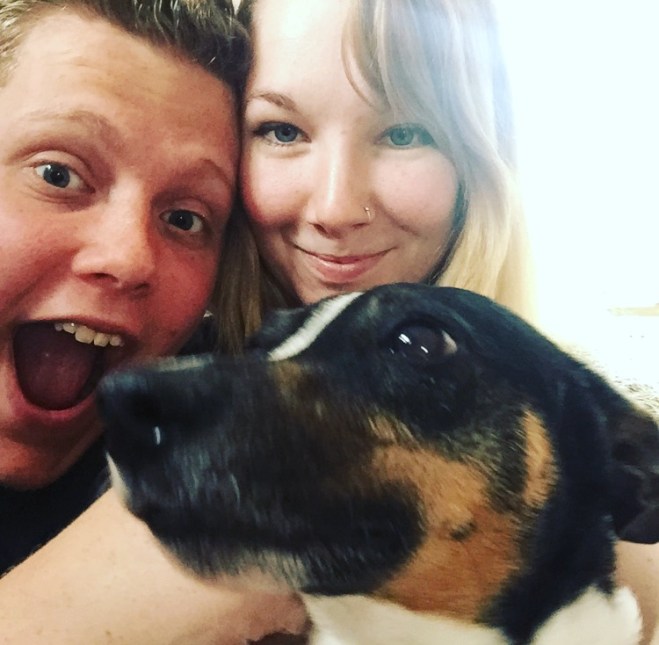
These are our voting faces. (This actually is my image)
‘Love is not breathlessness; it is not excitement; it is not the promulgation of promises of eternal passion. That is just being “in love”, which any of us can convince ourselves we are. Love itself is what is left over when being in love has burned away, and this is both an art and a fortunate accident.’
Captain Corelli’s Mandolin is a novel by Louis de Bernieres. Set in 1940s Cephalonia, the novel explores the realities of love, life and war for the people of the island. This review will have spoilers but it was published the year I was born so I think it’s been around long enough!
I’ll admit that it took me a long time to finish this book. The writing is incredibly detailed and rich, and as a result can be quite difficult to get into. It’s certainly worth the effort though, and de Bernieres’ characters are incredibly realistic and multidimensional, as is his description of the island.
Captain Corelli’s Mandolin is for the most part almost like a collection of short stories, as opposed to one novel – it is told through various peoples’ viewpoints, which eventually overlap and merge into one story. Although it was hard to get into, it is easier to tackle if you read it part-by-part. This method of writing is an interesting one, and certainly something de Bernieres does well. In using different viewpoints to tell the story he not only keeps the writing interesting and varied for the reader, but also adds to the effect of the story. This way of writing builds up the world in a way that simple physical description can’t –realistically we all see the world in different ways, and de Bernieres’ characters are no different. Dr Iannis, for example, sees Cephalonia in a largely intellectual way; he sees history, his pride for his home is built on hundreds of years of imperialism and rebellion, survival and victory. Captain Corelli, on the other hand, has no such connection – he simply sees it as a beautiful island. He grows a connection to it, but one completely different to anyone else’s and unaffected by the history and ancestry Dr Iannis associates with the place.
In the same way, we see many different views on life and the war. De Bernieres’ characters are all sympathetic in some way – readers even find themselves sympathising with Gunter Weber, a German soldier who follows Nazi ideology quite firmly. In fact I think while reading it I found myself sympathetic to almost all of the characters – Mussolini and Hitler being obvious exceptions.
The setting of Cephallonia itself is an interesting one, and lends itself to incredibly tragic historical context. In 1943, the island was the location of one of the biggest prisoner of war massacres of World War Two, and yet it isn’t widely known about or discussed. The Massacre of the Acqui Division saw over 5000 Italian soldiers killed. De Bernieres uses Captain Corelli’s Mandolin to give a voice, not only to the island and normal people in the war, but also to those killed in this tragic event. It seems a shame to me that events like this aren’t put into history books, and that we often only see the facts and figures, rather than real stories. De Bernieres is an advocate for social history, and this is obvious throughout Corelli.
Okay, let’s get on to the unpopular opinions. The ending. I know a lot of people who love this book, and for the most part I agree, but I found the ending largely unsatisfying. I understand what de Bernieres was trying to do in separating and later reuniting Pelagia and Corelli, and I realise the effect that leaving the novel on a hopeful note has, particularly in a social commentary like this, but I’d almost have preferred the book to end without the reader knowing what happened to Corelli. Maybe I’m just cynical but it felt like de Bernieres was told to make the ending happier by his publisher. It’s been a few weeks since I finished it, and in that time I’ve come to terms with the ending and why de Bernieres chose to end it that way, but I still can’t say I like it, personally.
All in all, this is a brilliant piece of historical fiction and portrayal of smaller social groups in a largely generalised and politically regarded historical era. Corelli is realistic, funny and surprisingly optimistic. Maybe one day I’ll learn to love the ending. Maybe.
‘The nation’s favourite Shakespeare play is performed as never before; Deputy Artistic Director Erica Whyman directs 18 professional actors with local amateur groups around the UK as Shakespeare’s Mechanicals.’
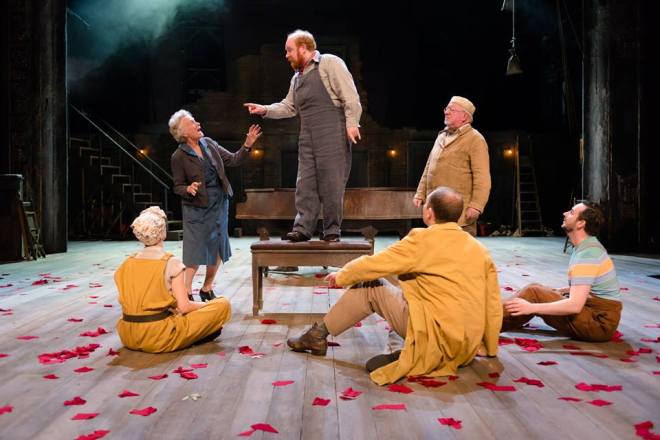
This year, the Royal Shakespeare Company have been touring a production of ‘A Midsummer Night’s Dream’ around the UK. Not only have they taken the show to 12 different venues, but have performed it in collaboration with 14 amateur groups. Although the tour has now finished, they are still performing at the Royal Shakespeare Theatre in Stratford Upon Avon until mid-July. The amateurs play “the mechanicals” – a group of workers who are themselves a kind of amateur theatre group – throughout the play they are rehearsing their play, ‘Pyramus and Thisbe’, to perform at Theseus’ wedding to Hippolyta. One of these workers, Bottom (the weaver) is quite a central character, and I was impressed to see at this role was also filled by amateur actors – in the performance I saw, done with The Bear Pit, the role was played by David Mears.
The Bear Pit as “The Mechanicals”
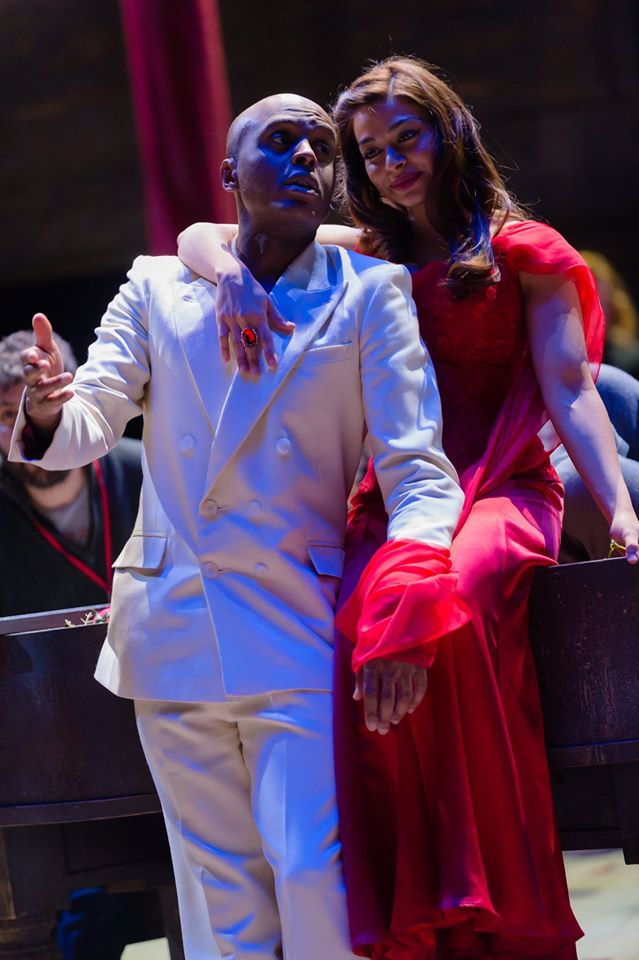
The Bear Pit is one of two companies based in Stratford-Upon-Avon that are involved in this project – the other is a group called The Nonentities. The Bear Pit were very good and worked seamlessly with the professional cast, however it would be interesting to see what other groups brought to the production as well. The production itself certainly lived up to the RSC’s infamous high standards. Lucy Ellison’s Puck was particularly brilliant – she performed with all the mischief and sparkle expected from the character and completely stole the show. Ayesha Dharkar’s Titania was beautifully regal, while her Oberon, Chu Omambala was intense and domineering – both were incredibly captivating. The four human “lovers” all worked incredibly well together, both in more serious scenes and highly comedic moments. As I only stand at 5ft1 myself, the short jokes made at Hermia’s expense were all too familiar!
Chu Omambala as Oberon and Lucy Ellison as Puck
The one thing about this production that I wasn’t entirely convinced by was the setting. The cast were mostly dressed in 1940s, typically British style clothing, with Titania being the main exception in a bright red sari. The music and backdrops fit, but it seemed to me that there was no real interaction between the play itself and a 1940s/world war setting. It looked good, and was more engaging than traditional Elizabethan dress, for example, but the lack of engagement with the play made this setting fall a little flat for me. The recent production of Hamlet was set in an African dictatorship, and this worked well and was blended perfectly with the plot of the play. Shakespeare has remained so popular for so long because his work can be translated to so many different situations, (particularly ‘Dream’ as ‘a play for the nation’) but the 1940s setting for this production just seemed a bit stuck-on, like they had already prepared the play and chose the set and costuming after. It was aesthetically pleasing, don’t get me wrong, especially the forest, however it didn’t feel like the aesthetics engaged with the play as well as they could’ve.
Chu Omambala as Oberon, Ayesha Dharkar as Titania
The use of children from the local primary school as the fairies worked surprisingly well – they were focused and had clearly put a lot of work in, although their part was small. Some critics weren’t sold on the song the fairies sung to help Titania sleep, however I found it sweet and a good way to show the fairies’ relationship with their queen – Oberon has very little interaction with fairies other than Puck, and the lullaby scene just added to the contrast between the two. The use of local children also compliments the use of amateur groups, and in my opinion they seemed just as polished as if they had been professional child actors. Overall, the production was very well put together and showed a fantastic collaboration between the professionals and amateurs – and that’s what this was. If you hadn’t known amateurs were in the performance I don’t think you could’ve been able to tell. The Bear Pit did a fantastic job and helped create another fantastic performance at the RSC.
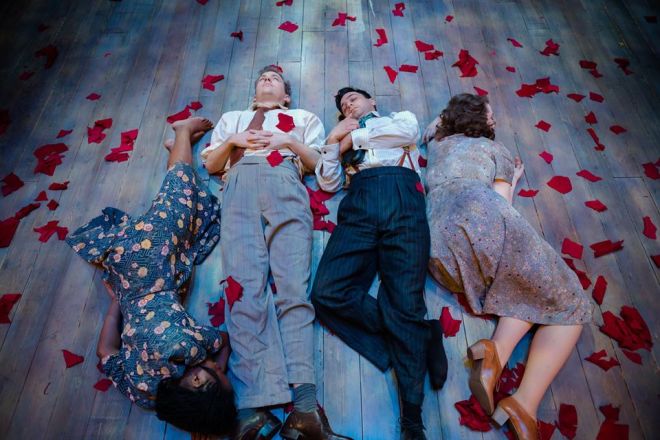
The Lovers – Mercy Ojelade as Hermia, Jack Holden as Lysander, Chris Nayak as Demetrius and Laura Riseborough as Helena (L to R)
I am very lucky to live fairly close to Stratford and the RSC – however up until recently I’d never actually seen a Shakespeare play live on stage; ‘A Midsummer Night’s Dream’ was the second Shakespeare play I’d seen, and the first of his comedies – the other play being the recent RSC production of Hamlet. I’m hoping to see the RSC’s productions of King Lear in August/September and The Tempest in November. If ‘Dream’ is anything to go by, I can’t wait.
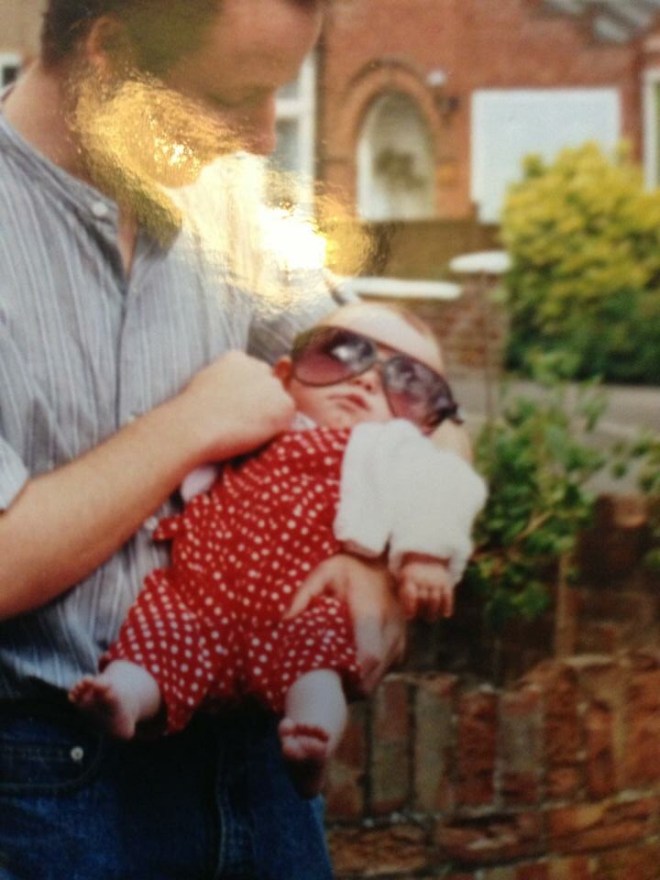
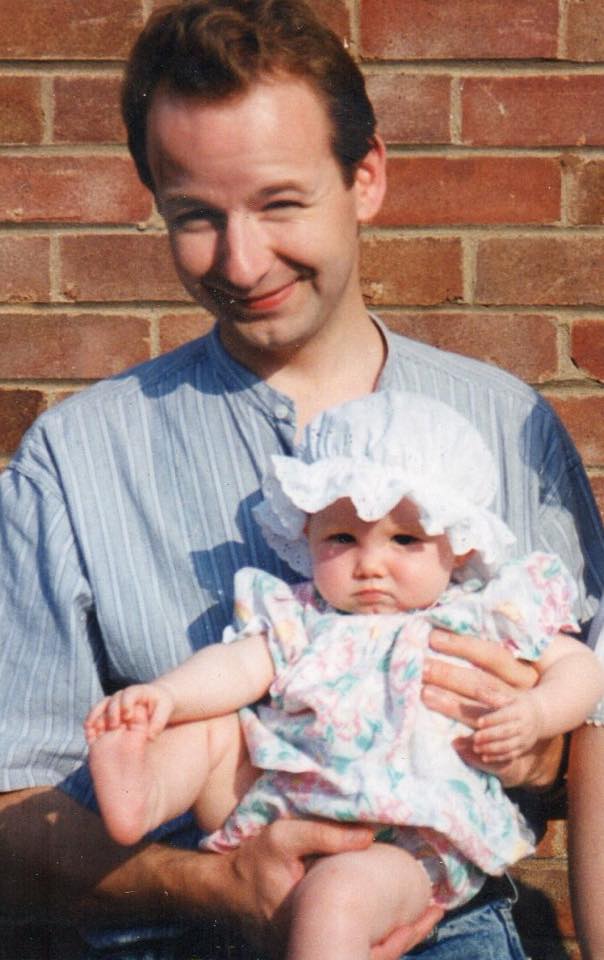
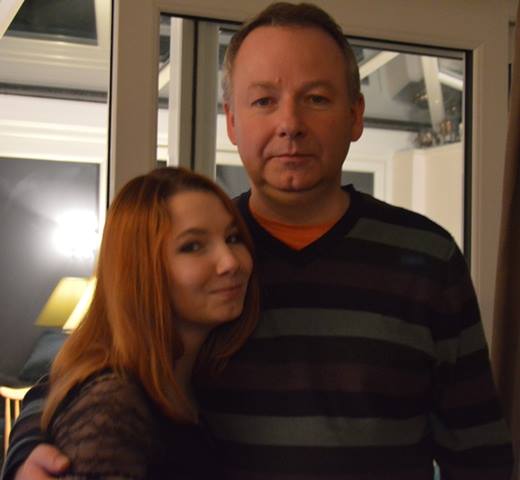
This is going to be a really short one as I’m away for a few days, but just thought I’d share something. Yesterday, as I’m sure you’re well aware, was Father’s Day. I’m so lucky to have a dad as selfless, caring and brilliant as mine. He may get grumpy and he constantly moans at me for the state of my room (which even I’ll admit is disgustingly messy most of the time!) but he’s fantastic. Have few mildly embarrassing pictures of him and let me hear all about your great dads (or mums/parents!) in the comments!
Sorry dad, think I wore them better.One is not amused.
This is the only recent picture I have of us that we don’t look miserable in – my 19th birthday (NYE 2013)
I’m sure I don’t need to tell you this, but charity shops are a beautiful thing. Not only is your money contributing to good causes, but they’re also incredibly cheap. I have a lot of love for the charity shop. I just finished my book (review in two weeks – you’ll see why on Wednesday!) and although I have another on the go, I’m not quite in the right mood for the style of writing it’s in – it’s not an easy one to get into, and the language can be difficult to tackle. Having only just finished Captain Corelli’s Mandolin, another one with rich and heavy language, I need a break.
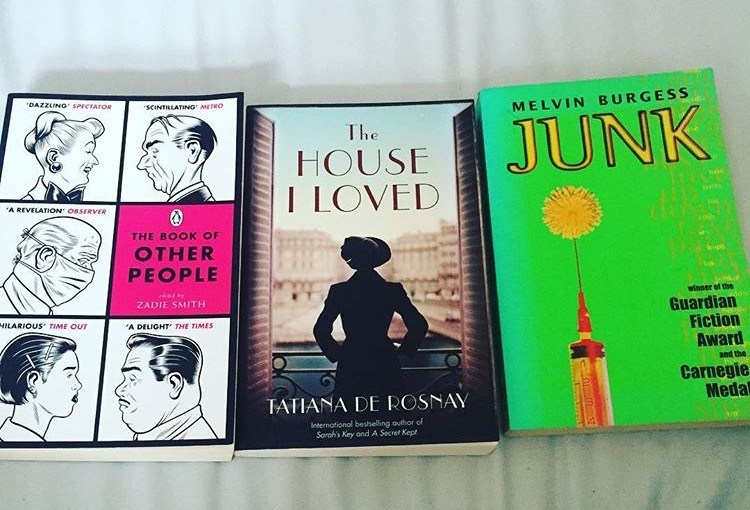
I’m travelling to London for a few days on Monday, so I need plenty to read for the train journeys as well, but don’t have a lot of funds – here’s where the charity shop comes in. I bought 3 brand-new books for 49p apiece at Barnardo’s, a children’s charity. All 3 have prices printed on them, and should’ve cost £22 at retail value – not a bad discount!
Now don’t get me wrong, I love my Kindle – I’m not a snob when it comes to paper vs electronic – and I love a brand new book, but charity shopping for books is generally speaking cheaper, and works much better than Kindle when you don’t know what you want exactly. Of course, you’re less likely to find independent authors or self published works, but they tend to be fairly cheap on Kindle anyway. The main problem I have with charity shopping for books that you don’t get with eBooks is that I never get rid of any – while I should donate my existing books before I buy any new ones, it never happens and the mountain of books I need to sort through just gets bigger and bigger!
I had the added benefit last summer of working at a charity shop, and intend to return once I’m settled in a paying job. I worked at a Cats Protection shop, and not only was the experience incredibly rewarding and something I thoroughly enjoyed, I also often got first look in with the books! I used to sort donations, particularly gift aided ones, so I was often the first person to look at the stock. Clothes go through the process of being steamed, tagged and priced before being ready to be sold, which could take a while if we had a backlog, but books could be put out straight away – meaning I could hoard any I wanted and buy them at the end of the day. This was not a healthy environment for my purse to be in.
Even if you don’t have the time to volunteer, I would definitely recommend going into charity shops for books, especially if you’re on a tight budget or looking for something different and unexpected – you never know what you’ll pick up!









 Always in the Write