Review Wednesday | Book Review – The Red Tent

the-red-tent

Her name is Dinah. In the Bible her fate is merely hinted at in a brief and violent detour within the verses of the Book of Genesis that recount the life of Jacob and his infamous dozen sons. The Red Tent is an extraordinary and engrossing tale of ancient womanhood and family honour. Told in Dinah’s voice, it opens with the story of her mothers – the four wives of Jacob – each of whom embodies unique feminine traits, and concludes with Dinah’s own startling and unforgettable story of betrayal, grief and love. Deeply affecting and intimate, The Red Tent combines outstandingly rich storytelling with an original insight into women’s society in a fascinating period of early history and such is its warmth and candour, it is guaranteed to win the hearts and minds of women across the world.

The Red Tent is a new perspective on an old tale. The story of Jacob/Yaqub is recognised and widely spread in all 3 main monotheistic religions, as are the stories of his father, Isaac and son Joseph (think technicolour dream coat, not Mary). The Red Tent tells the much lesser known story of Dinah, Jacob’s only named daughter.

I’ll say it straight up; if you’re squeamish about sex, menstruation and childbirth, this is not the book for you. The title alludes to the tent in which the women of Dinah’s childhood and early adulthood waited out their periods and gave birth. The story often centres on these topics – Dinah is never hidden from these issues as a child, and trains as a midwife as an adult. For women in this period, time spent in the red tent allowed for bonding and sisterhood in a way that normal working life did not; all of the women’s cycles in the camp were synced (also with the cycle of the moon – yes this is possible), meaning they all spent 3 days together every month. There is a large sense of sisterhood in the book, however it isn’t unrealistic or romanticised – the women disagree and fight on several occasions. Rebecca, Jacob’s mother, ruthlessly casts out Dinah’s cousin because her mother and the women of her camp did not follow the same tradition of the red tent.

Although most of the book is set after Dinah goes to Shechem (it’s not spoilers if the origin texts are thousands of years old!) and therefore features little of the physical red tent after this point, the bonds between women, particularly surrounding childbirth, remain strong. The novel shows woman power at its most real – the good, the bad and the bloody!

For me personally, the book felt almost nostalgic. I was born and raised Catholic, and although I’m not much of a believer now these are figures that I grew up hearing about. I don’t believe that you have to be religious or familiar with the religious teachings of the story to enjoy this book, but for me it added a layer of familiarity that certainly didn’t go amiss. Anita Diamant offers a brilliant new perspective on traditional tales and provides a more well-rounded and sympathetic view of the time period and Dinah’s story. It is incredibly well researched and I would say it would be an intriguing read for anyone.

Have you read this? What did you think? Are you religious?

See you soon,

Signature

Last Post: Me Monday | A (New) Graduate’s Guide To University – For All Years!

Follow Me:

Facebook
Twitter
Instagram
Goodreads
Bloglovin’
Pinterest
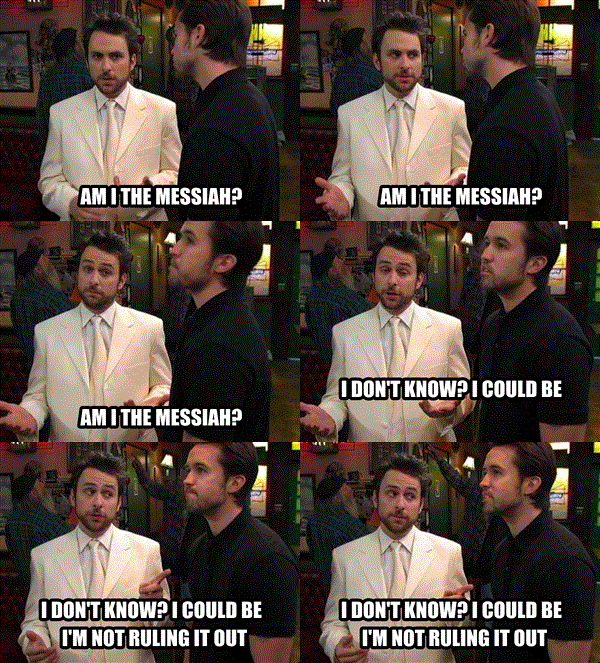
 

Charlie The Messiah.gif
Oh Charlie. [x]
Save

Review Wednesday | Book Review – Reasons to Stay Alive

Even more staggeringly, depression is a disease so bad that people are killing themselves because of it in a way they do not kill themselves with any other illness. Yet people still don’t really think depression really is that bad. If they did, they wouldn’t say the things they say.

Reasons to Stay Alive couldn’t have come into my life at a better time. Recent events have been catalysts for what I believe has been a long time coming. If I’m being completely honest, and I always aim to be here, I am in the midst of possibly the worst depressive episode I’ve ever experienced.

This book opens with author Matt Haig at his lowest. He is 24, living in Ibiza, and about to walk off a cliff. Reasons to Stay Alive discusses this, how he got there and how he got out of it. He talks about lying in bed unable to do anything but feel scared – a familiar image right now – and how he got out of this.

Haig struggles with Depression and Anxiety, as do I, however I believe this book could help anyone with mental health problems. If you have a mental illness, read this book. If you want to understand mental illness, read this book. If you care about someone with a mental illness, read this book. This is one of the most honest and real discussions of mental health I’ve ever read. It’s painful, raw, brutal and yet somehow uplifting.

Before reading this book it felt like I had no hope whatsoever – no job, no money, no driving licence, nothing and no reason to work towards anything. Reasons to Stay Alive, however, does something that is so important for recovery when you’re in such a low period – works in baby steps. Smaller than baby steps, in fact, tiny, miniscule ant steps.

Your mind is a galaxy. More dark than light. But the light makes it worthwhile. Which is to say, don’t kill yourself. Even when the darkness is total. Always know that life is not still. Time is space. You are moving through that galaxy. Wait for the stars.

Haig writes about how he began to see every moment spent thinking of something normal, without anything about his illness surrounding it, as a moment of hope. You are proving to yourself, without even realising necessarily, that you aren’t completely trapped in this feeling. Even if the ‘normal’ moment only lasts for a second, it’s something. It’s a sign that these moments will come, more and more often, until eventually they will take over the moments spent stuck in the depression.

This book has made things seem just a little bit less hopeless. I wouldn’t say I’m optimistic necessarily (let’s not get crazy now), but every time I catch myself thinking of something other than how terrible I feel, every time my stomach unravels enough to eat something, the book has taught me to take it as a sign. This is a slow process, but I will be okay eventually and for now it’s about the smallest victories.

Not all of this will apply to every situation, not every experience is the same, and I will admit that I cried a lot through the section about love and pretty much whenever he discussed how much he needed & appreciated his now wife (if you’re going through a heartbreak I would recommend skipping it unless you want to get bitter, Matt and Andrea are a wonderful couple). I do think, however, that everyone can learn something from this book. This isn’t a dull, useless self help book, this is real, accurate and helpful. Millions of people are dealing with experiences like Matt Haig’s – this story is one that is literally killing people, and Reasons to stay Alive is tackling this head on. Read it.

See you soon,

Signature

Last Post : Review Wednesday | Book Review – The Blind Assassin

Follow Me:

Facebook
Twitter
Instagram
Goodreads
Bloglovin’
Pinterest

LBD Lydia Lizzie I Love You.gif
[x]

Review Wednesday | Book Review- The Blind Assassin

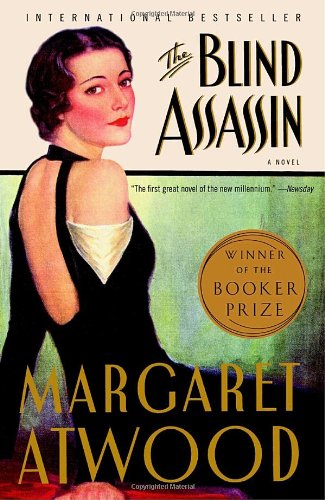
The Blind Assassin

‘“Ten days after the war ended, my sister Laura drove a car off a bridge.”

More than fifty years on, Iris Chase is remembering Laura’s death. And so begins an extraordinary and compelling story of two sisters and their secrets. Set against a panoramic backdrop of twentieth century history, The Blind Assassin is an epic tale of memory, intrigue and betrayal.’

The Blind Assassin is the first Margaret Atwood novel I’ve read. I’d heard rave reviews for The Handmaid’s Tale and The Heart Goes Last, but nothing of The Blind Assassin. It had been sat on the bookshelf in my conservatory for a long time, but I’d thought nothing of it until recently – what a mistake that was.

The Blind Assassin had me hooked from very early on in the story. While Dune, a novel of similar length, had me struggling to get even half way through in weeks (and I’ve still not picked it up again), I finished this book in five days.

The book is split into several view points and narratives. There are often newspaper clippings, invitations and other forms of literature among the text, placing the part of the story in a time and showing a more general perspective before Iris discusses details. The central narrative is that of Iris writing a sort of memoir-cum-letter to her descendents. There is also another narrative, showing extracts of ‘The Blind Assassin’, the revered novel by Laura Chase, which was posthumously published. The novel in the novel is about a couple meeting in secret, and sharing a story about an alien planet – a story in a story in a story.

The main narrative reminds me of The House I Loved in many ways – Iris is an elderly woman writing her life story, much like Rose Bazelet, and often the writing feels similar, despite being set in completely different eras. Both stories lead up to end of life revelations, of similar natures. They differ, however, in what they’re centred around. Iris is mostly focused on Laura’s death, while Rose’s letter to her husband is largely about their home. Iris’ viewpoint, therefore, is often a lot broader –she explores the entire world around her and her sister, rather than centring her story on her own house and street.

The brief explanations I offer here may sound vague and confusing, but this is far from the effect that Atwood’s own words achieve. Atwood manages to write clearly and steer the story incredibly well, even in the most hectic and confusing aspects. While the climax is fast paced and information-heavy, it somehow remains enjoyable. Iris and Atwood both remain calm and clearly know what they’re doing with the text. The result of this is a remarkable novel, full of twists, humour, sadness and mystery. My first foray into the world of Margaret Atwood certainly won’t be my last.

See you soon,

Signature

Last Post: Me (sort of) Monday | Quick Life Update!

Follow Me:

Facebook
Twitter
Instagram
Goodreads
Bloglovin’
Pinterest
Guitar Nerd
AVPS, I believe. Credit to StarKid Productions & whoever created the gif (I forgot to save the link, sorry!)

Me (sort of) Monday | Quick Life Update!

I know I didn’t post yesterday, which is why I thought I’d post today with just a quick update on life stuff and why I didn’t post yesterday instead.

Previously in my life…

I have been looking for a job for the last month (and since I graduated really, but as I had a work experience placement it was put on hold). I had some interviews last week but unfortunately nothing came of them – one would have been perfect but I’m trying not to get too discouraged; these things happen and something else will come up. I’d love to do something that actually relates to what I want to do in the long run, but at this point I think I’d take anything.

Job searching has been put on the back burner for the last few days, however, as I’m not currently at home. My family & I (well, my parents and youngest brother, the other one is at home) are on Anglesey, an island off North Wales. We came for the bank holiday weekend and are going home tomorrow (hopefully with enough time for me to post my review!). My grandparents live here so it’s been lovely too see them, and my Labrador loves the sea (the Jack Russell isn’t so keen)!

Anglesey is gorgeous, but I don’t think anything I can say will do it justice – I’ll just have to show you:


What’s been going on with you? Did you do anything over the bank holiday (if you’re in the UK)? Do your dogs like the sea/swimming?

See you (very) soon,

Signature

Last Post: Fandom Friday | The Problematic Fave

Follow Me:

Facebook
Twitter
Instagram
Goodreads
Bloglovin’
Pinterest
Gene Wilder Willy Wonka.gif
[x]

Fandom Friday | The Problematic Fave

Problematic favourites – we all have them, whether they’re TV shows, musicians, characters or books. I think everyone has something or someone they love but feel reluctant to discuss or recommend. Personally I worry that if I mention liking something problematic I run the risk of appearing to agree with that thing entirely, when this simply isn’t the case.

The term “problematic fave” has become somewhat of a joke, but I feel like the topic is actually something that is worth discussing seriously. Is it possible to like something problematic without being problematic yourself? How?

Of course it’s possible to like something problematic while still trying to not be problematic yourself – if it wasn’t we would be very limited as to what we could actually like. I believe that the most important thing about liking something problematic is realising and understanding that that thing is problematic – if you’re asking this question you’re probably already there. You can enjoy something while still recognising the bad aspects. Watch Breakfast at Tiffany’s as much as you like, so long as you understand the problem with Mickey Rooney’s Mr Yunioshi.

An example of one of my problematic favourites is It’s Always Sunny In Philadelphia. This differs from examples such as Breakfast at Tiffany’s in that the characters are intended to be terrible people – they are offensive and non- PC, and often get their comeuppance. The show often gets incredibly close to the bone, and although I enjoy it there are often moments that are incredibly problematic. Yes, this is the point, but it makes it very difficult to explain the show to people who haven’t seen it without sounding like a horrible person. I think what the show does well when you do watch it, however, is having a character step back and acknowledge how problematic the gang’s antics are.

Sunny.jpg
Found here.

It’s important to remember as well that characters are just characters, and that they don’t reflect writers or audience’s opinions. On the same lines, it’s important to remember that you can separate art and the creator – you don’t have to like an artist/writer as a person to appreciate their work. Justin Bieber’s behaviour is often deplorable, but I don’t think I’ve met anyone who doesn’t sing along to Sorry if it comes on in a bar.

Bunny
Photo by Beth at GeekShot Photography, found on her blog.

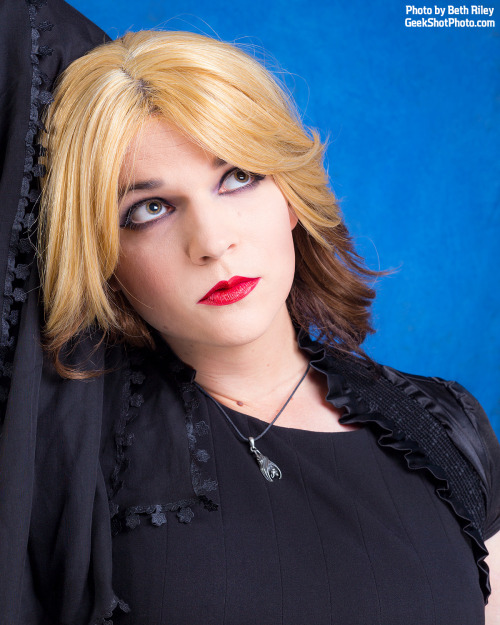
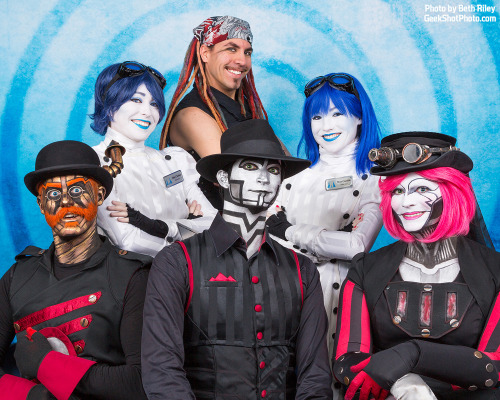
Another example of one of my “problematic faves” is Isabella (Bunny) Bennett. Bunny is a member of Steam Powered Giraffe, a band who perform as steampunk robots. A while back she caused quite a stir online after making several jokes about eating disorders and self harm. It became important for the band to emphasise that their work isn’t directly connected to the people – fans don’t have to like them as people in order to like the music and surrounding art (Bunny and fellow band member Sam often sell prints and band merchandise that they have drawn themselves). Further still, you don’t have to agree with everything Bunny says/does to like her in general. I like Bunny and connect with her in many ways, but these jokes were shocking and not something I support at all. I find it important if “Saladgate” comes up to reiterate that I don’t agree with the joke at all, but that I still like the band and the people.

SPG
I mean look at that costuming. Found on the Steam Powered Giraffe website.

While you don’t have to like a creator or even the whole piece of work, it’s incredibly important to recognise and address problems with them. We cannot ignore problematic aspects of film, music, literature etc, or this adds to the problem. We have to say “I like this, but I don’t condone [offensive aspect]”, in order to send a message to creators about what is and isn’t acceptable.

What are some of your “problematic faves”? How do you describe them to people?

See you soon,

Signature

Last Post: Review Wednesday | Book Review – Heartborn (ARC Review)

Follow Me:

Facebook
Twitter
Instagram
Goodreads
Bloglovin’
Pinterest

Charlie Sunny.gif
[x]

Me Monday | Why Do I Blog?

Anyone can blog. The ‘blogosphere’ is saturated and sometimes it feels like there’s very little point in blogging – someone’s probably already covered whatever it is you’re writing about. Although I’ve only been doing it for three months, it’s so easy to lose motivation. This is why I’m so happy to be a part of the #IBlogBecause campaign and reaffirm why I’m doing this – it’s so easy to forget and I definitely need to remind myself sometimes!

IMG_4822.JPG

#IBlogBecause:

It’s a way to express myself. Blogging has given me a voice in a way that I just haven’t had before, even in creative writing. People listen to me! I can talk about what I want and the chances are someone else is interested, too.

The community. I’m becoming more involved in blogger chats and trying to find a place in this community – I love finding bloggers who are friendly and positive, empowering each other and supporting each others’ work. The internet can be a really dark place and it’s so good to find people who build each other up instead of shout at each other.

Purely because it’s fun! I enjoy it and I’m finding that I’m keeping up with it a lot more than I thought I would.

Do you blog? Why? Let me know!

See you soon,

Signature

Last Post: Fandom Friday | How Girls Grow Up In Fiction: George Eliot to Winona Ryder

Follow Me:

Facebook
Twitter
Instagram
Goodreads
Bloglovin’
Pinterest

bloghog.gif
So Adorable. Found Here

Fandom Friday | How Girls Grow Up In Fiction: George Eliot to Winona Ryder

Portrayals of girls in the media can be…interesting. Particularly when those girls are growing up. These plotlines are widely explored and range from weird to downright oppressive. Here are some of my favourite/least favourite examples:

Continue reading Fandom Friday | How Girls Grow Up In Fiction: George Eliot to Winona Ryder

Writing About Writing: Why I Hate The Word ‘Aspiring’

I am very lucky to say that I am friends with a lot of creative people. Doing a creative writing course I naturally made friends with a lot of writers, but I also know a lot of artists, and more recently have come to know a lot of bloggers. One thing all of these creative people have in common, other than much larger emotional ranges than normal and a tendency to lean to the left of political issues, is that they’re all reluctant to label themselves as such.

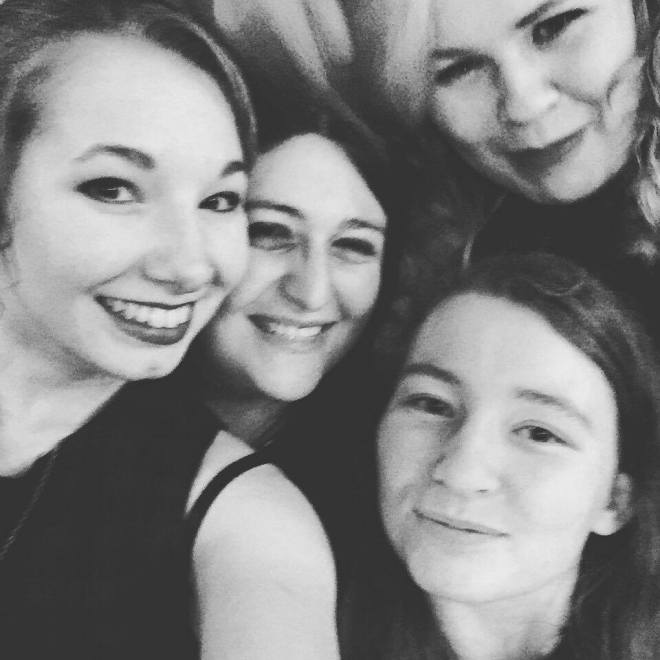
lovely ladies
Look at these lovely ladies. So much talent in one photo. 

A lot of people I know have a tendency to say they’re ‘wannabe artists’ or ‘aspiring bloggers’. This frustrates me because it shows a lack of confidence in the incredible work they produce. It downplays and even erases the hard work they put in to what they do. I had a seminar tutor once who told us it was bullshit to think of ourselves as anything but writers – we write, therefore we’re writers. We blog, therefore we’re bloggers.

Continue reading Writing About Writing: Why I Hate The Word ‘Aspiring’

Fandom Friday – HELP, I’M STUCK IN A BOOK! (and not in the fun way!)

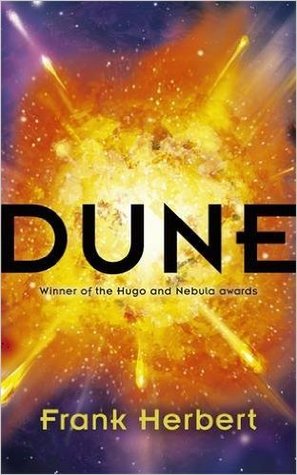
So if you follow me on Twitter, you’ve probably seen me complain about struggling to get through Dune by Frank Herbert. I’ve described the book as ‘Space Game of Thrones’ to several people, and incidentally I had the same problem while trying to tackle the A Song of Ice and Fire series.

Dune


It’s not that I’m not enjoying the book – the premise is interesting and it’s very well written, but it’s so long and so heavy. I could quite happily read a 1000 page novel, but the pacing has to be right. For me, a large amount of action for long periods of time just doesn’t work; I need breaks, slower moments. I’m about 320 pages in, and this enough for me – I can only handle so much of the heavily detailed, jam-packed writing Herbert uses.

So what do I do? I don’t like putting down books and reading others, as I find that I give up on the first one too easily (just ask A Storm of Swords, it’s been left half finished on my Kindle for at least a year), but I’m not reading because if I do I’m getting nowhere. Maybe in the future I should have a page limit on books I intend to review. I read the last three books I’ve reviewed (The House I Loved, The Book of Other People and Junk) in about two weeks, so I thought I’d tackle a longer book – and one that I’ve been meaning to read since I got it 3 years ago.

Have you ever been in this situation? How do you tackle it – do you plough through or take a break; or give up entirely?

See you soon,

Signature

Last Post: Review Wednesday – Junk

Follow Me:

Facebook
Twitter
Instagram
Goodreads
Bloglovin’
Pinterest

Willow Help.gif
600 PAGES, MAN. 600.

Review Wednesday – Book Review: Junk


Tar loves Gemma, but Gemma doesn’t want to be tied down – not to anyone or anything. Gemma wants to fly. But no one can fly forever. One day, somehow, finally, you have to come down.

I picked this book up absolutely clueless as to what it was – it sounded familiar, but I had no idea just how significant it is. Melvin Burgess’ Junk was the first YA novel of its kind, and certainly unlike any other YA novel I’ve ever read.

Junk celebrated its 20th anniversary this year, and as such Melvin Burgess was awarded the Andersen Press Young Adult Book Prize Special Achievement Award. Andersen Press are also releasing a 20th anniversary edition of the novel. So what makes it so special?

Continue reading Review Wednesday – Book Review: Junk